ASP.NET Core in .NET 10 isn’t about new features
- It’s about fixing the things that hurt in production.
- After reading through what’s coming in .NET 10, one thing stood out clearly:
- Microsoft is optimizing for real systems, not demos.
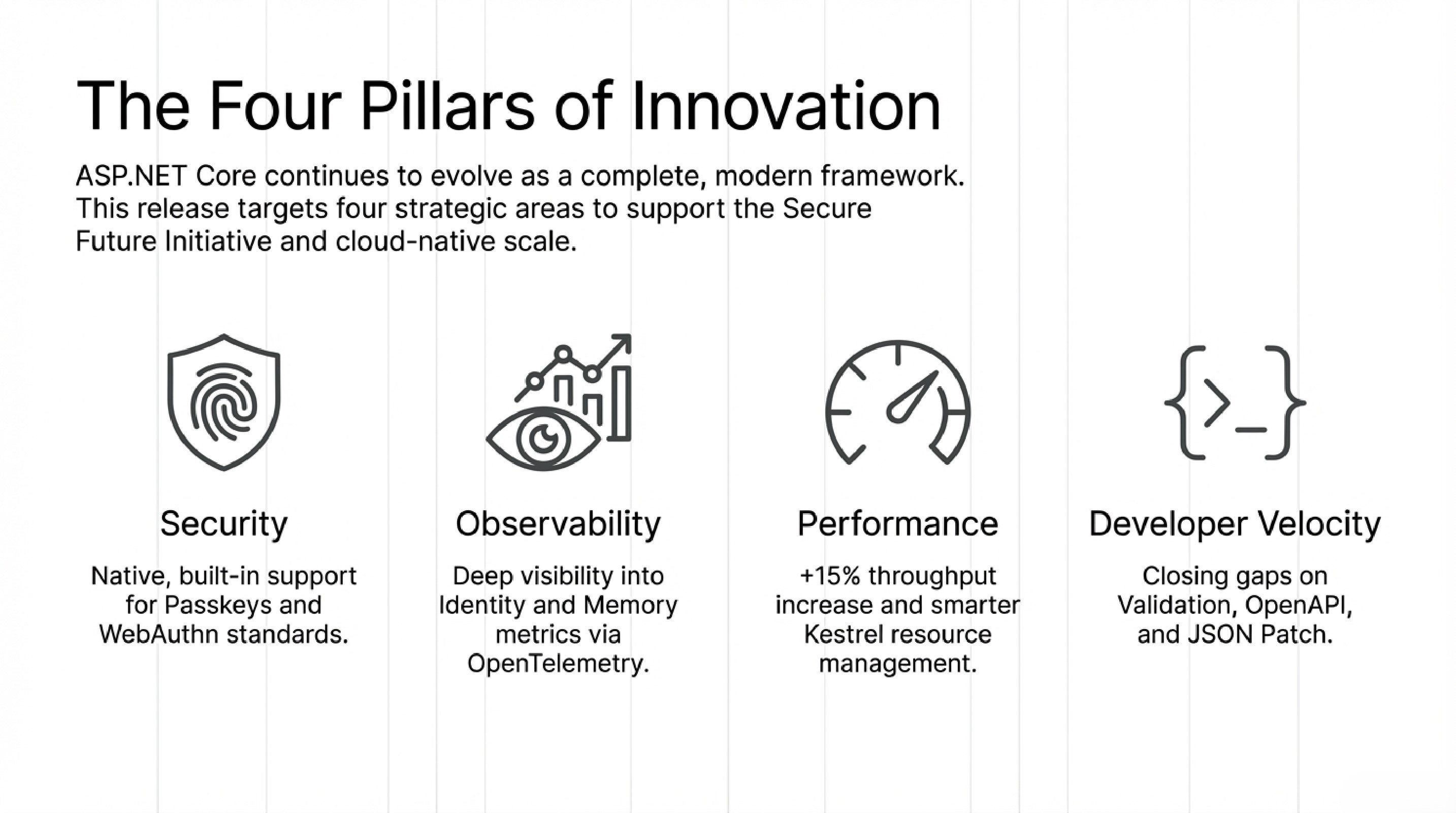
Security is no longer “optional later”
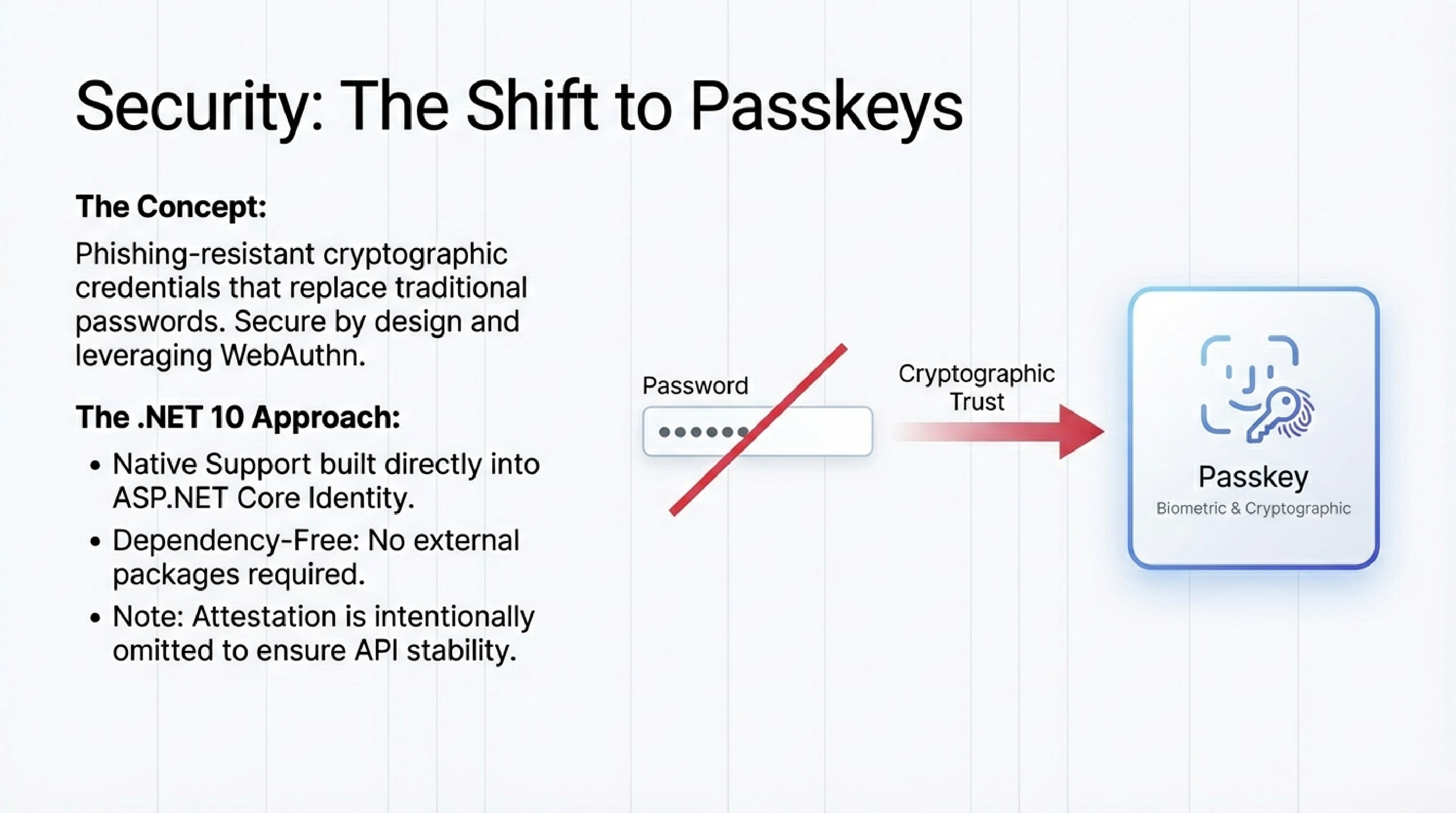
- Passwords are finally being treated as legacy.
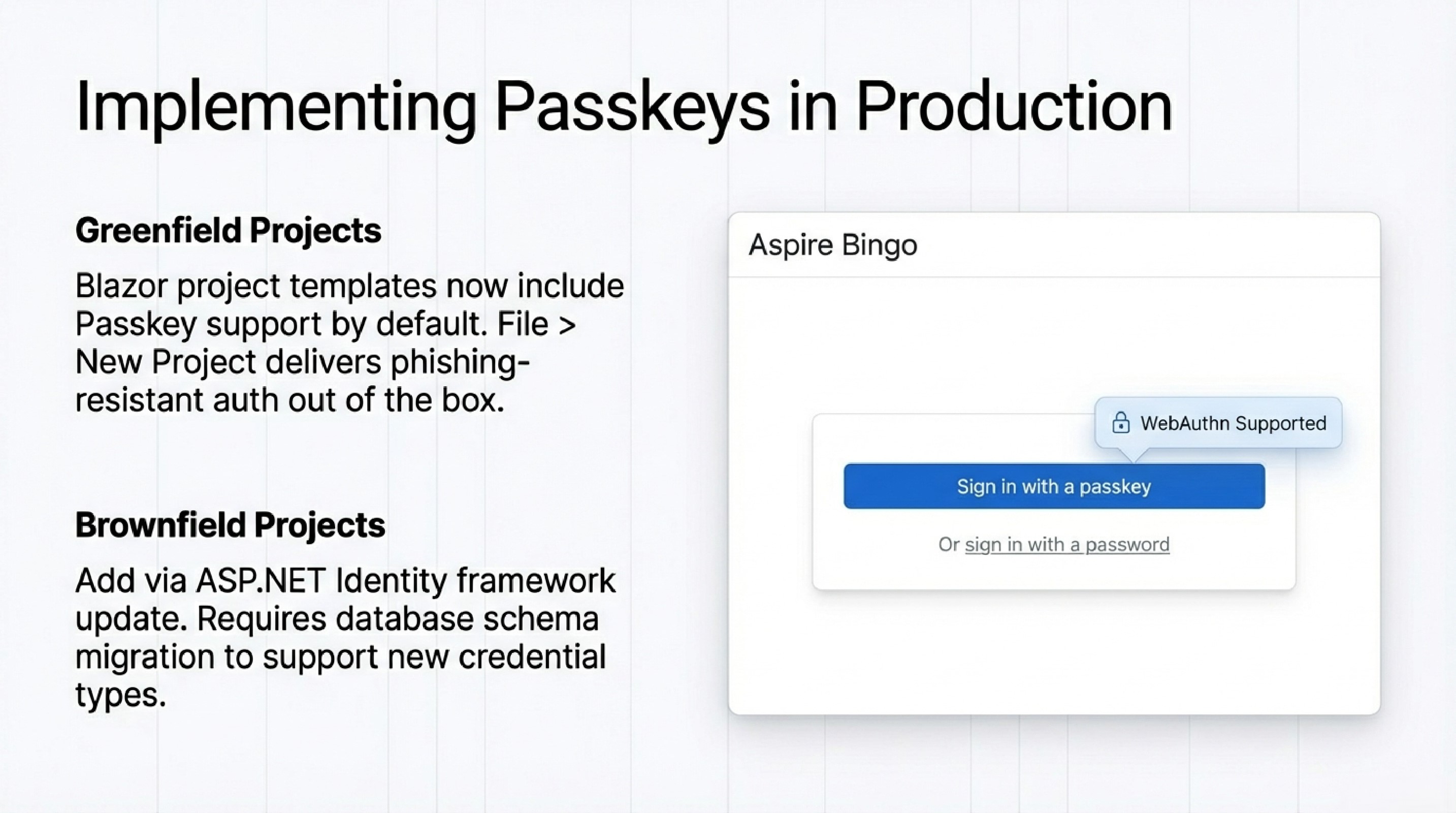
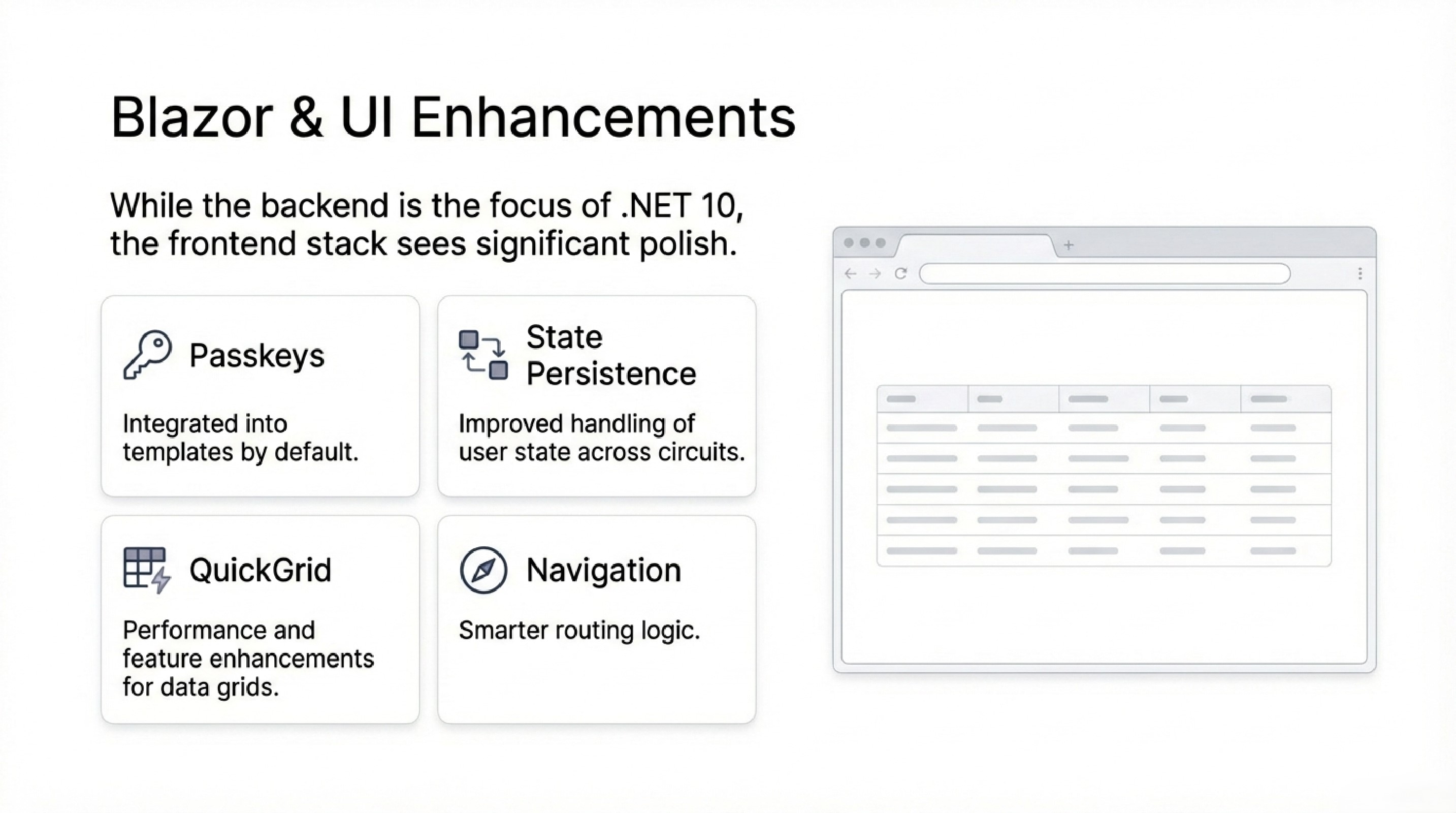
- Built-in passkeys (WebAuthn) support
- Secure-by-default Blazor templates
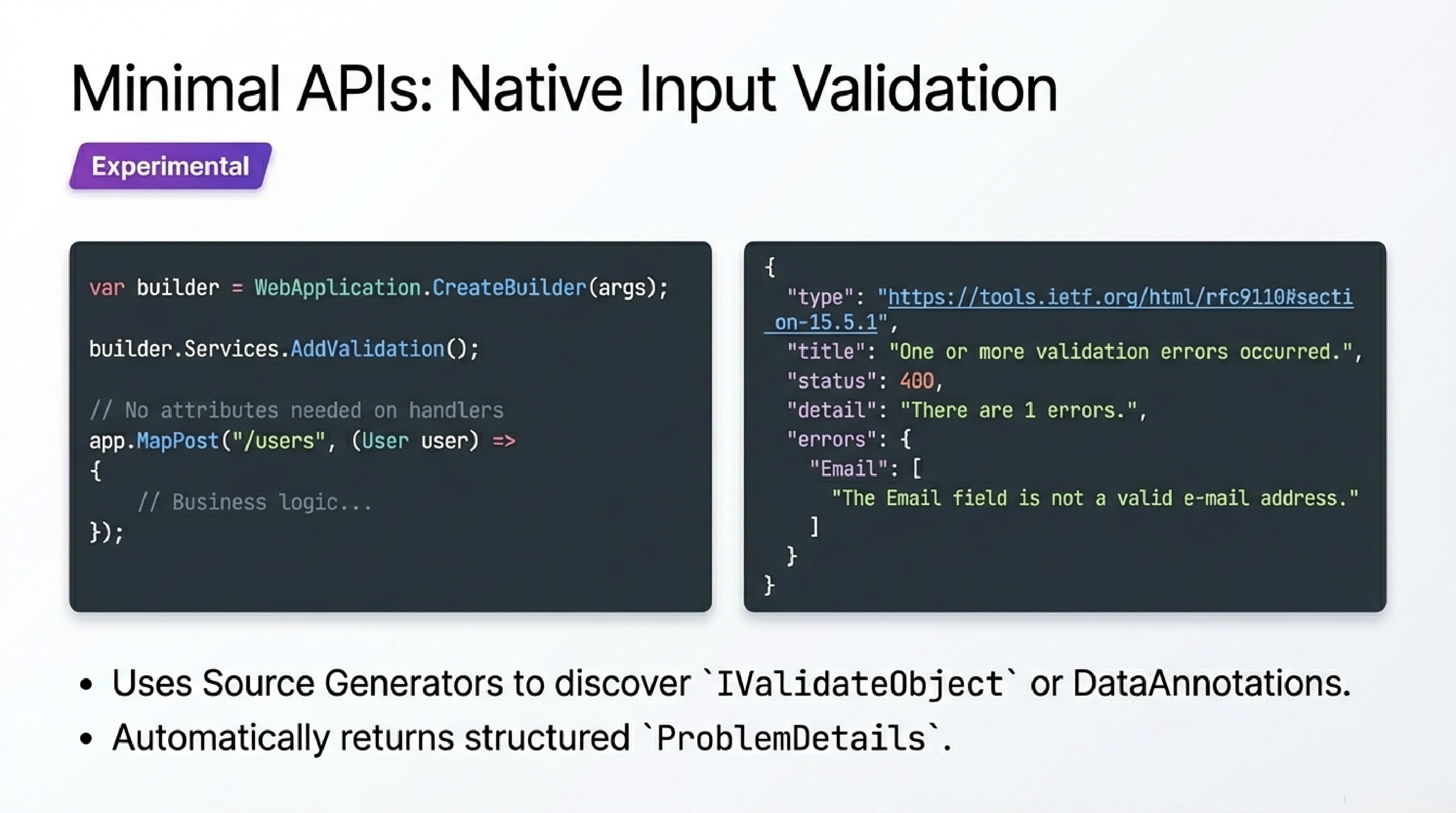
- Stronger focus on input validation, even in minimal APIs
- Security is moving from documentation into defaults. That’s a big cultural change.
Observability is becoming first-class
- This one matters more than it sounds.
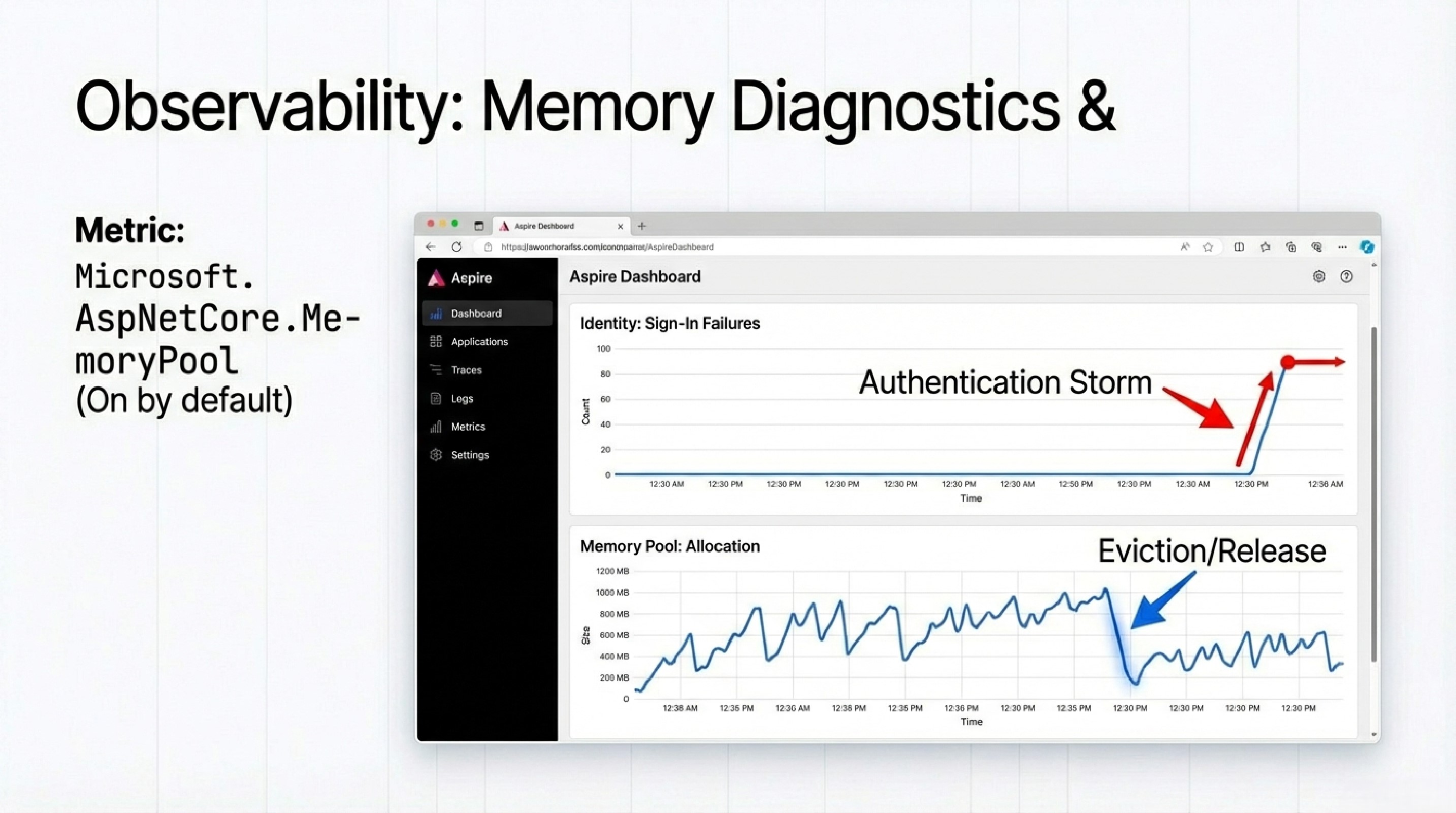
- Metrics for identity flows (sign-ins, user creation)
- Memory pool metrics you can actually act on
- Better OpenTelemetry + Aspire dashboard integration
- This means fewer “it feels slower” conversations and more “here’s the metric that changed”.
Performance that reduces cloud bills
- Not benchmark flexing. Practical wins.
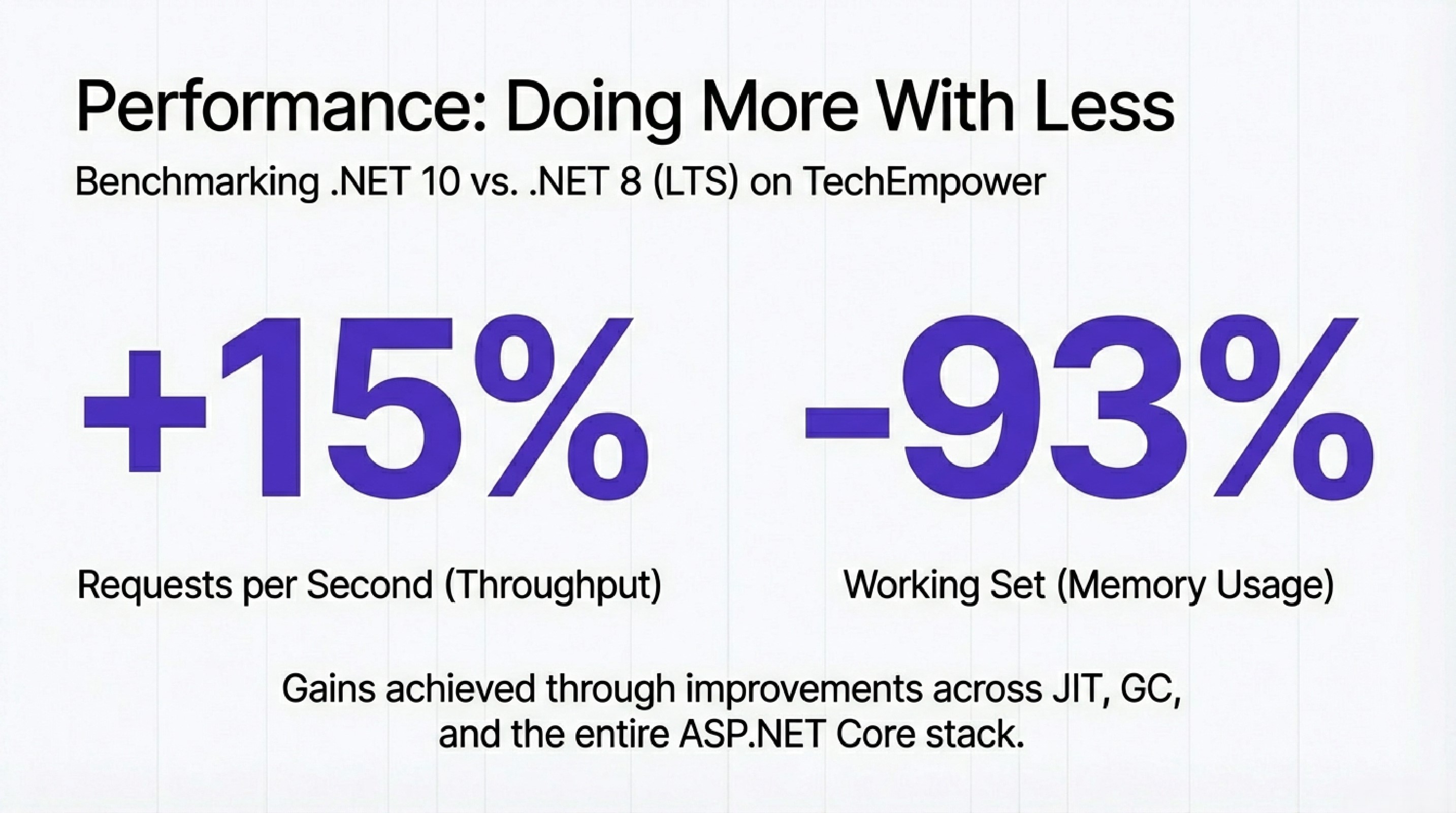
- ~15% throughput improvement
- ~93% working set reduction since .NET 8
- Kestrel now returns memory to the OS when load drops
- If you run APIs at scale, this directly impacts cost.
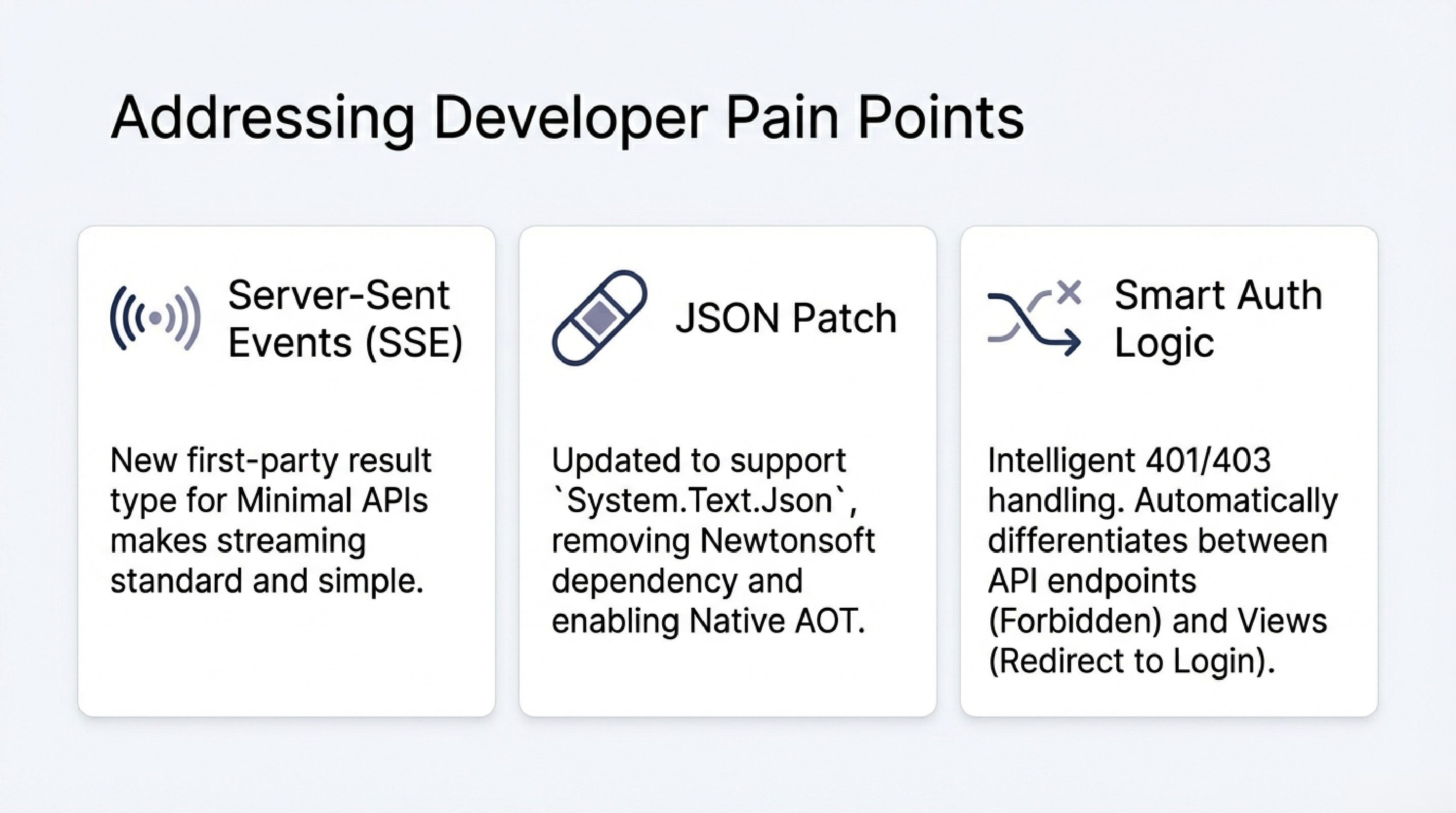
Developer pain points finally addressed
- This is the underrated part.
- Validation support for minimal APIs (long overdue)
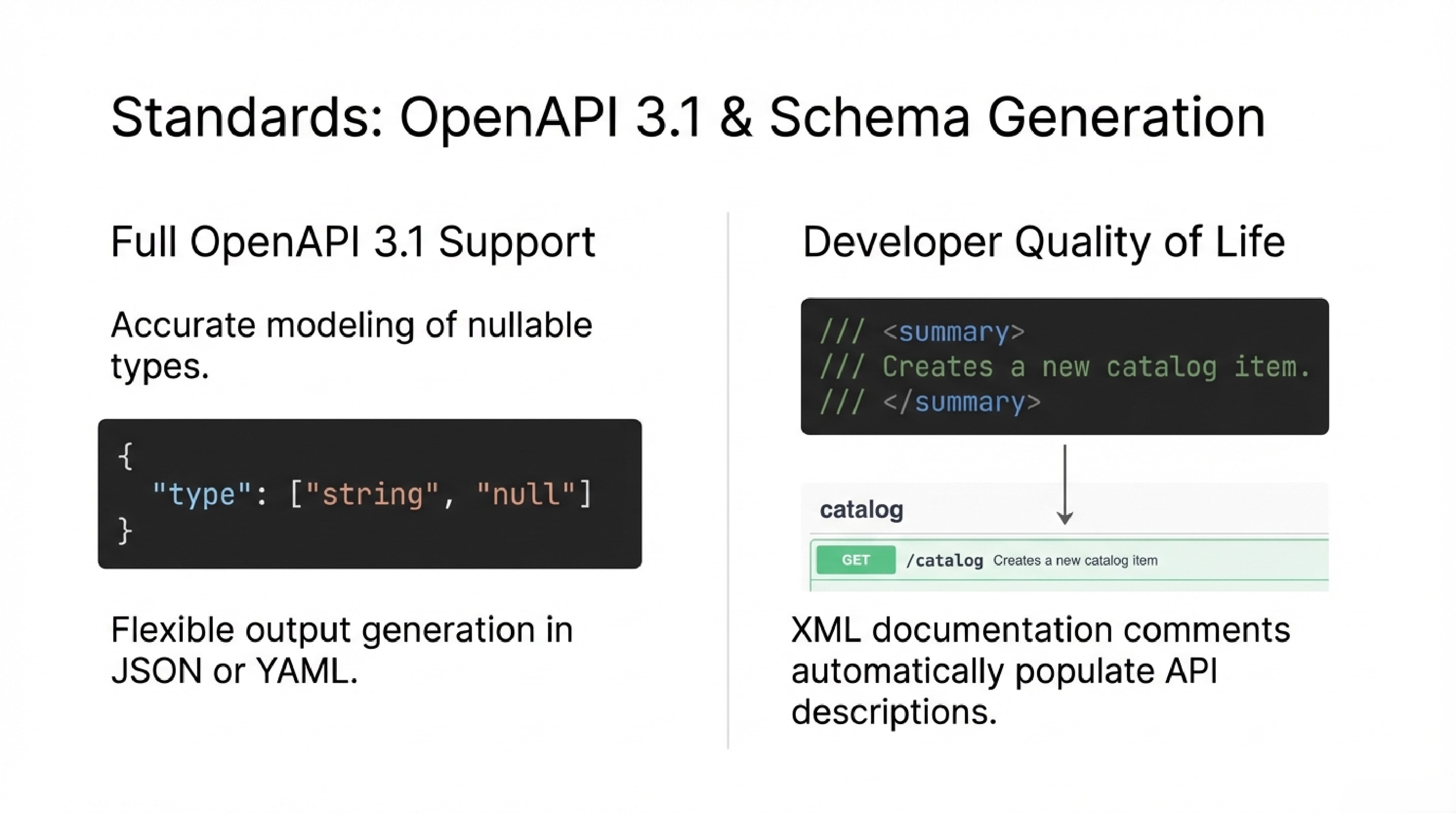
- OpenAPI 3.1, YAML, better docs
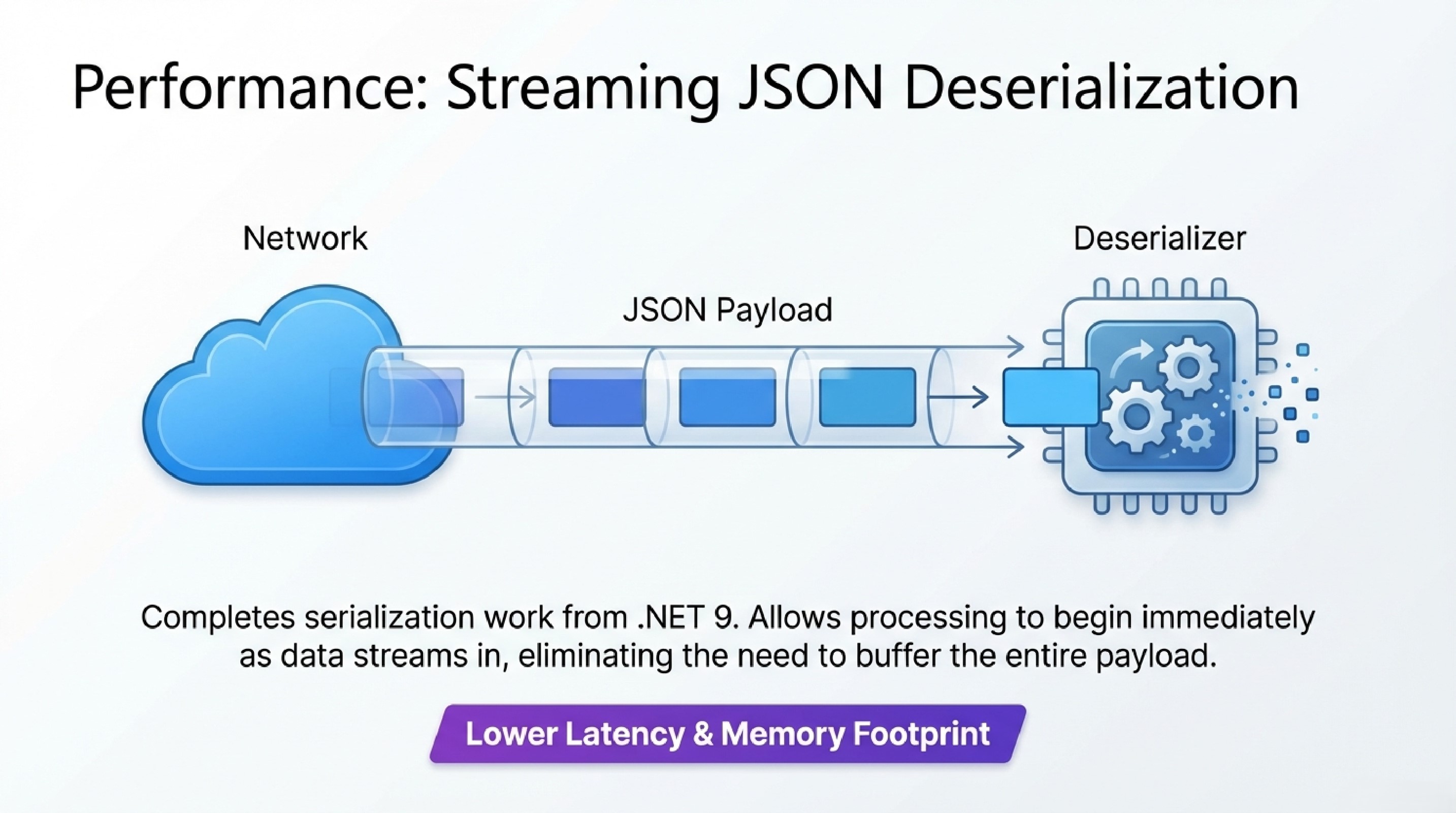
- JSON Patch modernized with System.Text.Json
- Smarter handling of unauthorized requests (403 vs redirects)
- These aren’t flashy features — they’re trust builders.
My takeaway as a backend developer:
- .NET 10 is less about “learning new things”
- and more about unlearning workarounds.
- Secure by default.
- Observable by design.
- Performant under real load.
- That’s the direction mature platforms take.
The images below demonstrate this...